Vilnius City Guide: Prices, Things to Do, Where to Stay & Local Tips
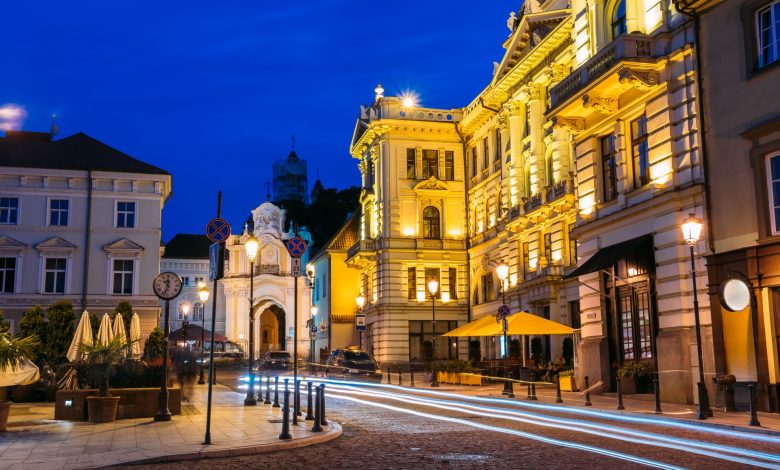
When I first visited Vilnius, Lithuania, in late summer (August 8th to August 17th), I knew little about this city. Most likely, you are in a similar situation, but trust me when I say that you will be surprised by everything it has to offer and that’s exactly what I am here today for.
I am sharing my travel guide to Vilnius, so you can come prepared. This city is so much better than its reputation, yet almost nobody outside the Baltics treats it as a serious destination.
The city is the capital of Lithuania and packs tons of charm into its small town feel. Those looking for hustle and bustle will most likely be disappointed, but those who prefer smaller places that are full of charm (and where you can almost walk everywhere) are in for a treat.
So, before we jump in, here are a few things to start off: I recommend spending 2-4 days in Vilnius, and you should visit between May – September, as the weather is warmer.
Prices in Vilnius, Lithuania

The cost of Vilnius remains very much in line with other Baltic, Eastern, or Central European capitals. That means everything is more affordable than in Paris, London, or Copenhagen, but Lithuania is not one of those super cheap countries where you can live on €500 a month and still save money.
Inflation did its thing here after 2022, same as everywhere, but Vilnius still gives you solid value if you avoid the tourist traps around Pilies Street.
Here are some price ranges you can expect when you visit this year:
Accommodation:
- Hostels: €18 to €30 per night for a dorm bed, depending on season and location.
- Mid-range hotels: €80 to €140 per night for a double room with private bathroom.
- Luxury hotels: €180 to €300 per night, with a few heritage properties testing the sky.
Food and Drink:
- Local restaurants: A basic, yet filling meal costs between €12 and €18 per person. A fancier dinner with drinks will easily cost anything between €30 and €50.
- Street food: Pastries, local kibinai, and filled buns go for €2 to €5.
- Coffee: €2.50 to €4.50 depending on the venue.
- Beer in a pub: €4 to €6 for a local lager. Craft beer starts at around €9.
Transportation:
- Public transport: A single ticket on Vilnius buses or trolleybuses costs around €1 (for 30 minutes), but double check the price of a Vilniečio kortelė to be safe.
- 24-hour ticket: Around €5. Longer term tickets and tourist passes exist, too.
- Taxis and rideshare: Bolt or Uber (the latter – not as common) starts at around €0.60 per km, with a short central ride costing €5 to €8.
- Car rental: €30 to €50 per day for a small car, but you don’t need one unless you plan day trips outside the city.
To and from the Vilnius AIRPORT: You can take a taxi from the airport to the city center for 10 to 15 euros. There’s also a bus or train that will drop you off at the main station for 1 euro/ride. The main bus and train stations are at the south end of the city.
Entertainment:
- Museums: Admission fees range from €6 to €14 for the major ones. Small galleries and churches are cheaper or free.
- Nightlife: A beer in a pub costs around €4 to €6 (local beer), while a cocktail will cost around €8-€10.
Overall, Vilnius is an affordable destination and you’re still getting a nice bang for your buck (or Euro) here.
Where to Stay in Vilnius
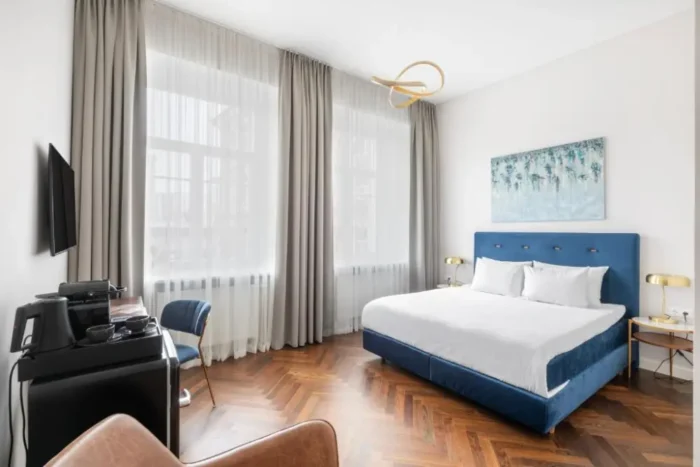
There are plenty of choices in a city as small as Vilnius, but even though it’s small, you should always choose accommodation in the old town area (the city center). This area is the one you must be because you are close to almost everything worth seeing or doing.
Everything is walkable from the Old Town. You can quite literally walk from one end of the central area to the other in twenty minutes, and that includes stopping to take a photo (or more) of a pink church and other attractions (more on that later).
If you don’t want to do hours of research, I have stayed at the Grand Crown, an aparthotel of really high quality with decent prices, right in the heart of the city. It is not the cheapest option, but it is clean, quiet, and within stumbling distance of several good bars.
If you want a proper hotel or other options, here are my recommendation (all within the old town area):
- Best luxury hotel: Hotel Pacai
- Best value overall: Shakespeare Boutique Hotel
- Best budget-friendly option: Hotel Apia
Food to Try in Vilnius

Lithuanian food is not for fragile eaters. It is heavy, savory, and built for northern winters. I liked it, but I also ran out of digestive stamina after a few days of pork, potatoes, fried bread and dumplings (cepelins/zeppelins – their national dish, seen in my photo above). But boy, I loved those dumplings!
The local beer is better than Budweiser, but it is not craft beer unless you go to one of the small breweries around town. Still, a cold Švyturys or Kalnapilis on a warm evening hits harder than any overpriced IPA.
Overall, Vilnius offers a wide range of delicious dishes, from traditional to world cuisine, with something to suit every taste. Here are the dishes you should not leave without trying.
Cepelins (already mentioned): Potato dumplings stuffed with minced meat or curd, drowned in sour cream and bacon sauce. One portion is a meal, but even though you might regret it later, you will order seconds. I did, no shame to admit it!
Šaltibarščiai: While I only ordered it by pointing a finger to it (impossible to say that word!), it’s a delicious cold beetroot soup with buttermilk, eggs, cucumber, and dill. It looks like a smoothie made by a vampire and tastes like summer. Eat it with boiled potatoes on the side.
Kibinai: Pastry pockets filled with mutton, pork, or cheese. Originally from the Trakai region, they travel well and make a great bus snack.
Fried garlic bread with cheese: This is a pub staple and dangerously addictive. You will smell like garlic for two days, but it’s totally worth it.
Potato pancakes: Crispy edges, soft middle, served with sour cream or mushroom sauce.
Šakotis: A tree-shaped cake that is more about texture and presentation than flavor, imho. Goes well with coffee, though.
Is tap water safe to drink in Vilnius?
Most of the locals drink tap water in Vilnius, but after I did, I suffered greatly. Not 100% sure it was the water, but I’d recommend sticking with bottled water. It’s cheap enough and not worth risking an upset stomach during your stay there.
Things to do in Vilnius
I know this deserves a separate article, but I will quickly go through the main attractions in the city, especially since I think you can easily cover them all – or at least most of them – in a single day.
1. Trakai – Top Attraction
I will start with Trakai Castle, just 15 or so kilometers outside the city, which is worth a visit. I consider it the main attraction in the area and an amazing place for a day trip (or at least several hours) – just look at the photo I took below to see what I mean:

If you want to check it out, I recommend booking the 4h Private Tour to Trakai, which includes an air-conditioned minibus from Vilnius and an amazing English-speaking guide.
Now, back to the city and it’s main attractions:
2. Visit The Old Town
Vilnius’ Old Town is a UNESCO World Heritage Site, and I can see why they did it. Winding cobblestone streets, beautiful and colorful buildings, and historic landmarks – this is what you get if you explore it by foot (which I recommend).
There are plenty of places to eat or have a drink here and do some people watching, although most of the restaurants in the area are a bit pricier than the rest.
Specific spots worth your time: St. Anne’s Church, which Napoleon supposedly wanted to take back to Paris, the Gate of Dawn with its holy icon, and Literatų Street, a tiny alley covered in plaques dedicated to writers.
3. Gediminas Castle

It sits atop the hill at the outskirts of Vilnius, and visitors can climb to the top for stunning views of the city. This is where you can get some really good photos for Instagram to impress your friends.
If you are interested in learning more about the country’s history, there’s also a museum you can visit here. I stuck with the views.
4. Cathedral Square
At the base of the hill where you have the Gediminas Tower, you have another important landmark in Vilnius: the Cathedral square.
Surrounded by historic buildings, including the Vilnius Cathedral and the Palace of the Grand Dukes of Lithuania, this square is a must see for anybody visiting Lithuania’s capital.
The bell tower is separate from the cathedral, which confuses first time visitors because it looks like a defensive tower. Climb it if you want a different angle on the square.
5. Uzupis
This up and coming, artistic neighborhood is a real gem in the city, usually compared to the Montmartre neighborhood in Paris or Valencia‘s Ruzafa. It’s a bohemian area with colorful street art, galleries, and cafes.
Of course, the official neighborhood is really huge, but you should only stick to the area close to the city center and the Vilnia river, since there’s where the magic happens.
And there is some magic, for sure, because this area is actually called the “Independent Republic of Uzupis,” a self-proclaimed republic with its own president, constitution and national anthem.
All in all, while the city is clean and has its own beauty, Vilnius lacks the big-city feel that is typically accompanied by impressive architectural monuments like those in Budapest, for example. It has plenty for a smaller city, but that’s all.
The Rotunda is quite nice, and it’s green. However, it feels like a small town – the buildings are rarely higher than a couple of stories, which is either a bonus or a con, depending on what you like to see and do.
6. The Three Crosses
On a hill above the city, three white crosses overlook Vilnius. You can hike up from the river in about 15 minutes.
The view is better than from Gediminas Tower because you see the whole Old Town skyline without obstruction. Go at sunset for the best light and amazing photo opportunities.
7. Museum of Occupations and Freedom Fights
This is the former KGB building, and it is interesting to say the least. The basement cells are intact, and the exhibits cover Soviet and Nazi occupations without sugarcoating.
It is not a fun museum, but it is an important one – one that should be visited and remembered, so we don’t ever think that mistakes from the past can be done once more. Give yourself two hours to visit, and then go drink a beer somewhere sunny.
8. MO Museum
A modern art museum in a striking white building. Even if you are not into contemporary art, the architecture is worth a look. The collection focuses on Lithuanian artists from the 20th century onward.
9. Halės Market
It’s the main market hall near the station and it has been renovated and now mixes traditional food stalls with trendy food counters. You can buy smoked meats, pickles, fresh produce, or just eat a bowl of soup among locals.
10. Vilnius TV Tower
The tallest structure in Lithuania, with an observation deck and a revolving restaurant offering amazing views that stretch for miles. The restaurant is not cheap, but you can buy a ticket just for the deck. It is a bit out of the center, so take a Bolt or a bus.
How Many Days in Vilnius? Quick Itinerary

You can cover the main central attractions in one full day, but that would be a rush. I spent ten days there and ran out of tourist things to do, but I personally like to slow travel and take my time. However, for most travelers, I think that spending three days in Vilnius is ideal.
Here’s the quick itinerary in that case:
Day one: Old Town, Cathedral Square, Gediminas Tower, and Užupis.
Day two: Museums, markets, and some proper food exploration.
Day three: Day trip to Trakai, or a slower day visiting neighborhoods and drinking coffee.
If you only have two days, skip one museum and do Trakai on the morning of day two. If you have four days, add a day trip to Kernavė or just sleep in and enjoy the city.
Nightlife Scene in Vilnius
The primary nightlife scene in Vilnius is pub and bar based. Some nightclubs go off during the week (and definitely do on the weekends), but you can always find people out and about on the weeknights at the pubs.
Just walk down Vilniaus gatvė, and you will find something fun. That street, along with Islandijos gatvė and Vokiečių gatvė, forms the core bar district. In summer, the action spills onto terraces and the riverside, even though it’s not really nightclubs.
Is Vilnius Safe for Travelers?
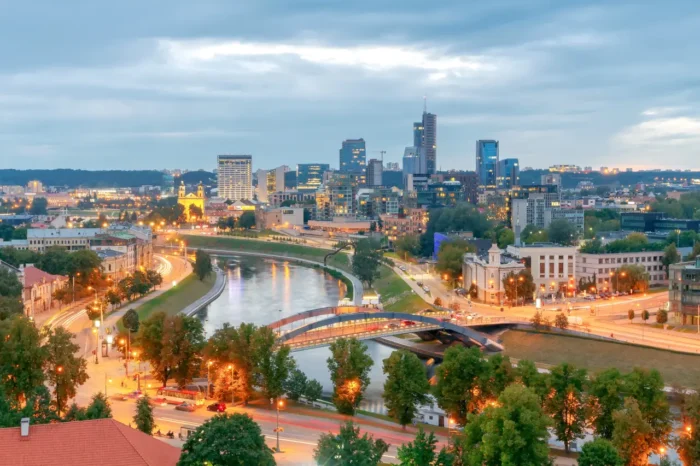
Yes, Vilnius is completely and utterly safe. Perhaps you wouldn’t have the same feel if you wandered outside of the main area, but I didn’t go that far and I doubt that would be the case.
But if you stick to the more central areas, you will never have any reason to feel unsafe.
Lithuanian people are very friendly and especially curious why you’ve chosen to visit – as Vilnius doesn’t scream tourist destination as opposed to some other, larger Eastern European capitals such as Prague or Budapest.
I was asked a lot why I chose to visit, so make sure to have your answers ready.
Conclusion
I really enjoyed my ten days in Vilnius, but feel as if I got the most out of the city. I ran out of tourist things to do, and the local nightlife scene wasn’t interesting enough that I’d feel a huge urge to stick around. It’s worth a visit – but once is enough.
If you have comments and thoughts to share about Lithuania’s capital, don’t hesitate to let us all know by commenting below.