Dress Code for Thailand Temples for Men and Women [Do’s, Don’ts and More]
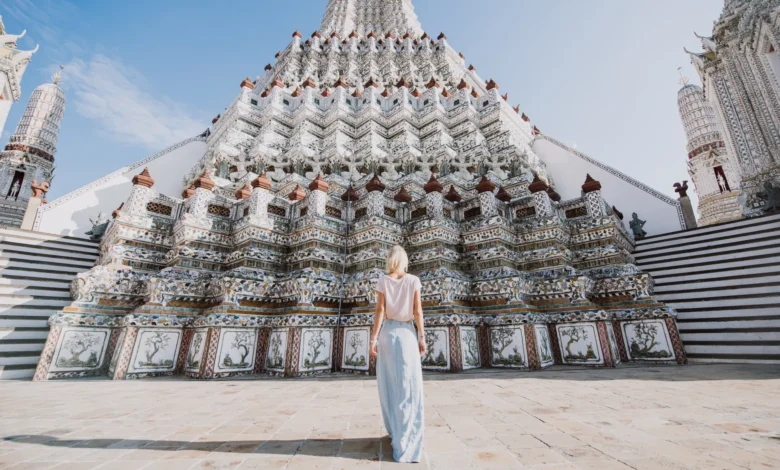
If you ever land in Thailand, visiting as many of the amazing Thai temples there as possible is a must. But they come with a strict dress code that you must respect. After all, getting turned away at the gates of a 500-year-old sanctuary because you decided a Singha beer tank top was high fashion is definitely not pleasant.
And this is what we’re going to talk about today: what to wear when visiting temples in Thailand, so you can stay as cool as humanly possible while showing respect for the deeply rooted Buddhist faith of the Thai people.
General Rules for Dressing in Thai Temples (for Women and Men)

The general rule of thumb when visiting a temple is Thailand is to cover up. This goes for both sexes, who should at least cover their shoulders and knees. Ideally, you should cover your ankles too.
In terms of what to wear, think of any decent clothing items that you have, from regular t-shirts (buttoned up at the neck and NOT sleeveless) to blouses and polos.
Make sure your shirt has a plain, family-friendly design – clothing featuring offensive graphics, political signs, or explicit language is also forbidden in Thai temples.
If you have something that doesn’t fully cover your shoulders, a scarf is usually acceptable – but it’s best and safest to prepare in advance and be properly dressed.
As for pants, the best choice is to go with ankle-length trousers or a skirt. Longer shorts, capris, and any sort of skirts that cover the knees are acceptable, though. Tight yoga pants, shredded jeans, and any type of see-through fabric are the things that will get you denied, though.
As for shoes, it’s very easy here because you will have to take off any kind of shoes that you are wearing. Therefore, wearing something that’s easy to take off (including sandals or flip flops) is the best approach.
PRO TIP: You are allowed to wear socks when visiting most Thai temples. Having a pair with you would be a good idea, especially if you’re not used to stepping on the sometimes scorching-hot floors.
All in all, the dress code for Thai temples is all about dressing modestly and appropriately by covering your shoulders and knees, as well as being mindful that you are a visitor in a sacred space.
The Grand Palace Exception
One of the more special places in Thailand is the Wat Phra Kaew, known as the Temple of the Emerald Buddha and located inside the Grand Palace complex.
Here, the scarf rule doesn’t work, as they have stricter rules than most temples in the area. There might be others as strict, so this is why it’s best to be prepared instead of hoping that the scarf will work.
Now, at Wat Phra Kaew, they do not accept scarves, shawls, or pashminas draped over a tank top to bypass the dress code. You must be wearing an actual shirt with sleeves. Otherwise you will be denied entry.
The “Elephant Pants” Solution
Buying a pair of these flowy, baggy, brightly colored pants, usually covered in elephant prints, is probably the best solution for visiting the temples, especially if you didn’t come prepared.
Street vendors sell these everywhere; they cost almost nothing and provide an instant fix if you accidentally wore shorts that sit above the knee – or anything inappropriate by the Thai temple standard.
The best part about these pants is that they are extremely breathable and make the suffocating afternoon humidity a bit more bearable.
Just check the seams before you hand over your cash because they have a habit of ripping wide open when you sit down on the temple steps.
Avoid “inappropriate dress code” scams around Thai Temples
Since we’re here, I want to tell you about a potential scam that some locals might want to try on you.
It usually happens around the temples, where you will have a local or maybe a tuk-tuk driver tell you that you’re not properly dressed to visit. They might also claim the temple is closed right now for a Buddhist holiday or a special monk ceremony.
Even if that is true, don’t take their offer to take you to a place where you can get appropriate attire. They will load you into their tuk-tuk and drag you to various tourist-trap tailor shops or gem stores where you will end up paying massively inflated prices. Politely decline and you will be left alone.
Remember – Thailand is an extremely affordable country to live in, and while you can no longer make ends meet on as little as $500 per month as you could several years ago, your foreigner status will make people assume you’re rich and some will try to take advantage of that. Fortunately, just a small minority.
What Happens If You’re Not Dressed Appropriately when Visiting a Temple in Thailand?

If you’re not dressed appropriately – following the simple rules above – you might not be allowed to enter. However, that rarely happens in most places.
Instead, you will most likely be asked to wear a sarong or a robe provided by the temple – and most of the larger ones will have these available. But it’s easier to simply get things right from the beginning instead of putting on clothing that you never know how many others have worn before you.
Make sure to also read my previous article about the best time of the year to visit Thailand. You don’t want to be there during the burning season aka the smoky season.
Wrapping up
Now you should be an absolute expert when it comes to knowing what to wear when visiting a temple in Thailand.
Remember, in the end, that it’s all about being considerate for the culture of the people you’re visiting and fortunately their dress code is extremely easy to follow.
So as long as you wear modest clothes that cover your shoulders and knees – no matter if you are male or female – you are good to go when it comes to Thai temples.
Speaking of spirituality and amazing places, don’t hesitate to explore next the Naka Cave in Thailand – one of those special spots with an amazing legend behind them.