15 Things about Romanian Culture You MUST Know
I think that the first thing that crosses your mind right now when you think about Romania is Vampires and Transylvania. However, there is definitely a lot more to Romanian culture than count Dracula!
And that is what we’re going to be discussing today: 15 important things that you should know about Romanian culture.
I personally love how this country exists in a constant state of paradox. You have some of the fastest internet in the world in agricultural village houses where horse-drawn carts are still used for transportation. And this alone sets the stage for what you should expect from today’s article: a mixture of the new and old.
1. Romanians are not gypsies
Well, technically, the Roma (aka the gypsies) are citizens of the country, but they are a different ethnic group.
As statistics go, around 90% of the citizens here are Romanian, then we have 6.5% Hungarian and just 3.2% Roma people.
The main language is Romanian, but there are also native Hungarian and German speakers. However, don’t try to call a Romanian a Roma (or a gypsy). Confusing nationality with ethnicity can easily offend people here, especially if you tell a Romanian that he’s a Roma.
2. That being said, it is the Roma people that are often associated with the country…

…since they are migrating heavily to Western countries, just like regular Romanians do, but they are usually more visible due to their activities.
There are also many Romanians that do the same and plenty of kids raised by their grandparents while their parents are away.
3. Despite their apparent friendliness, they are private and reserved at first
They are not quick to jump into deep friendships with absolute strangers. That being said, they will value your interest in their country and, more often than not, go out of their way to help a foreigner or to make their stay more pleasant.
There might be a language barrier, too, so consider that they might not be rude, simply confused of their lack of knowledge of English.
But you will see that many people DO speak at least some English in Romania, most of them being able to have a fluent conversation with a native speaker.
Bottom line, bear in mind that language might be an issue with the Romanian culture, but only if you suspect they don’t understand you.
4. Manners and respect go hand in hand

Older people, as well as those with advanced degrees or with higher-risk professions (doctors, engineers, policemen), are treated with utmost respect for their experience and knowledge.
In Romanian culture, a lot of value is placed on titles, so addressing others with their proper title+last name is the proper way to go about when interacting.
5. Religion, Tradition, and Changing Mindsets
The Romanian Orthodox Church plays a massive role in daily life, and many Romanians trust a priest’s advice above anything else.
This is the truth in regards to Romania, although the younger generations are much more open minded and forward-thinking.
But patriarchal values are still present here and sometimes it makes the people here seem bigoted and a bit backward to a Western visitor.
At the same time, they are also very friendly and polite (as I already mentioned), so as long as you respect their views, they will respect yours (minus some of the old ladies – they are judgmental, but there’s nothing you can do here).
In any case, expect a certain degree of homophobia and a bit of racism here and there – although I doubt anybody would get more than a few stares here and there.
Again – I have to say it – things are changing and getting better in this area, but still there’s work to be done and more time is needed. And, of course, this only applies to a very small number of Romanians.
6. Hospitality matters a lot to them, especially to the women
It is often regarded as a housewife’s duty to take excellent care of her guests and thus put her family in a great light.
This is why sudden, surprise visits are not really welcome – you don’t know what state the house will be in and you might put your hosts in an uncomfortable situation.
But even so, Romanians won’t hesitate to welcome you in and take good care of you. Especially when it comes to foreigners, Romanians are very hospitable and friendly.
7. Apart from properly preparing the home, Romanians are also big on food

Meaning that portions will also be big and you will have to insist on not receiving a second helping.
The initial refusal is seen as a part of etiquette and this is why your hosts will not take it seriously. The same goes for alcohol and dietary preferences such as veganism.
You would have to be very firm to convince your hosts that no, you don’t want that third glass of wine / won’t eat their pork stew.
For vegans, gluten-free folks and such it’s always a good idea to say it in advance, but still double check and don’t get offended if they forgot or even remembered and still decided to offer meat (just in case).
It’s just part of the Romanian culture.
8. Women in Romania are amazing
Most Romanian women have successful careers AND do the majority of the house chores. If you want to go in-depth on this topic, I recommend reading this article about Romanian women.
The way this is balanced out is that some areas are considered a man’s job – for instance home improvement/repairs and car maintenance.
Be prepared, if you are a male, for a certain degree of mockery if you can’t work a power drill, and if you are female – if you can’t prepare basic dishes.
The other way round is true as well – women are perfectly fine not knowing how the engine works, men don’t need to learn to cook.
The urban tech hubs are rapidly dismantling this way of functioning, but in smaller towns and especially in villages, it’s basically a given.
I am not saying this is correct, but it is what it is. Once again, if you respect their views, Romanians will respect yours, too.
9. On the topic of women, they are treated with respect almost equal to that shown to senior citizens
In the public transport, it is expected of men to give up their seats to ladies, and of the young – to give them up to the older.
While this is common etiquette for most Western countries, in Romania it is near obligatory.
Expect some angry stares if you forget to do it, maybe even some confrontation (it has happened to me more times than I can count, and sometimes just because I didn’t notice the elderly lady that has entered).
But Romanian men are in general chivalrous. They open or hold the door, they let the lady enter first, they get her coat… they treat her with respect at all times.
10. With so many conservative values, you will be surprised at how OK it is to drink and smoke in public
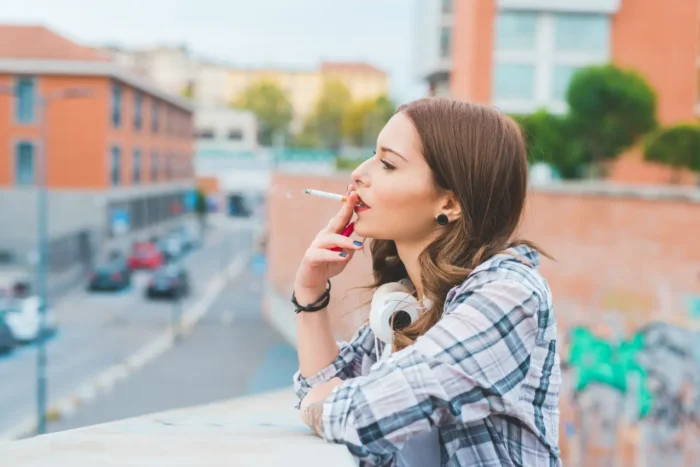
In the hot summer nights, parks are the place to be and everybody drinks beer, some even hard liquor. Drunkedness, however, is way more frowned upon than in Western countries.
Romanians are easily shocked and disgusted at drunk people, even if they are just a bunch of 20-something’s making their way home from the club.
In general, you will notice that while Romanian people drink quite a lot, they don’t really get blind drunk and throwing up is actually rare, even at disco bathrooms.
Also, expect to see many people smoking in Romania. Some bars and restaurants even bend the rules to the maximum to allow people to smoke inside (at least in smaller towns), even though this is illegal for a long time now. But they get creative.
Various more modern alternatives are also popular (and getting more popular as time passes) and these are usually permitted even in no-smoking areas…
Beyond alcohol, I love how Romania has developed one of the most exciting specialty coffee scenes in Europe. Sitting at an outdoor cafe with a perfectly roasted flat white is an essential daily ritual here.
11. The booze of choice (apart from the universally popular beer) is called Țuică
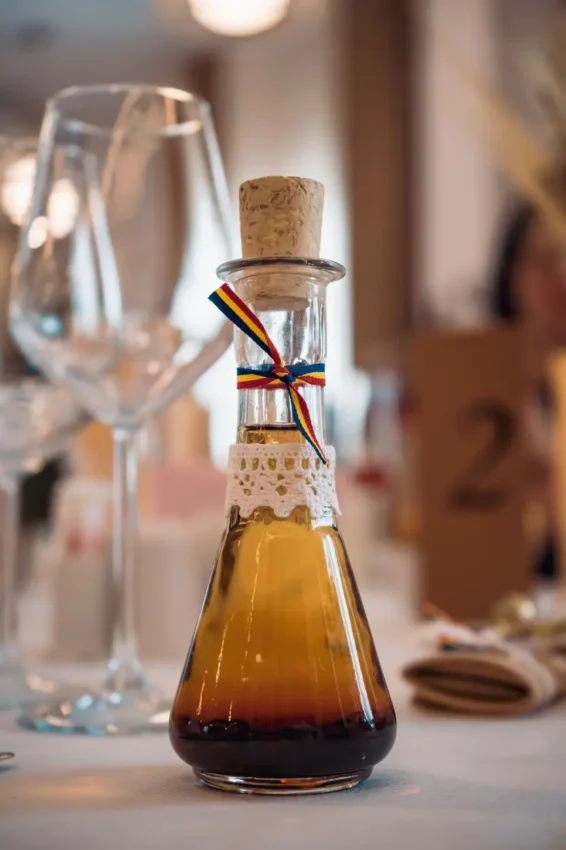
…and you better know how to hold your alcohol, since this one is at least 40% and usually you have it with salad or appetizers, as an aperitif.
In a way, Romanians see the spirit as an appetizer in itself, as it is said to increase your appetite for the rich, greasy dishes to follow.
The Tuica is an alcoholic beverage made from plums usually and similar to Rakija in Balkan countries.
12. Superstition is a real important part of Romanian culture
While not all weird rules are followed by everybody, some superstitions are so popular that you might have a hard time convincing people that they are untrue and don’t really matter.
Black cats come to mind, but also not leaving your bag on the floor, not sitting at the corner of a table, not whistling inside a building (which means you invite evil spirits inside).
And then there is the ultimate Romanian fear: curentul. Romanians universally believe that a cold draft from two open windows will make you violently ill. Try opening a window on a hot bus, and watch the panic ensue.
You can read more about Romanian superstitions on the website Romania Experience.
13. Humility vs. The Modern Status Symbol
Older Romanians are incredibly humble and strongly dislike those who boast about their wealth or achievements, or just about how good they are overall. They also downplay their qualities so as not to come across as too full of themselves.
At the same time, paradoxically maybe, plenty love to do exactly that.
Self-irony and sense of humor are essential as they demonstrate both humility and cheerfulness. Romanians love to laugh at themselves first and, in general, are rarely offended by jokes that make fun of their lack of skills, for example, or clearly state the opposite of reality. But test the waters first, because there are still various people here with different types of humor.
This goes, at least, for the slightly older population. I’ve seen that the youth – Gen Z people mostly – are starting to ignore these old Romanian values and go to the other extreme… In cities like Bucharest or Cluj-Napoca, you will see a heavy emphasis on expensive cars, designer clothes, and the latest smartphones. Consumerism at its best!
14. Romania USED to be that very affordable country in the EU…
…not anymore. Prices for food items, eating out, and basically everything but rent (or property prices) are now on par with Western prices, sometimes more expensive, sometimes a bit lower. But about there.
While things are still affordable compared to Western European capitals, you will not find comically low prices anymore – on the contrary, you will probably be surprised with how expensive everything is, thinking that Romanians still have some of the lowest minimum wages in the EU, but also some of the lowest average salaries in Europe.
In the eyes of locals, your foreigner status might be equal to rich person status. This is both good (respect) and bad (attracting scammers/gold diggers), so keep your eyes open, without considering all Romanians interested only in your money, though.
15. Romanian cuisine might not be the most vegetarian-friendly, but everything is delectable
For some dishes, you will need to gather your courage and I hope you have a strong stomach, too.
Examples include tripe soup and a sort of meat-jello with pork and plenty of garlic (Piftie or Racitura).
A way to ease into it are all the different yummy breads, as well as their national dish made of boiled corn meal (Mămăligă).
The mămăligă goes with various different toppings, cheese and butter being the classic. Try it with bacon and eggs as well – corn goes surprisingly well with these.
Conclusion
Romania is large and still largely undiscovered. It is a great alternative for travelers on a budget who still want to have the European experience or for Westerners tired of the usual Greek beaches they visit for their vacations.
The Romanian culture is naturally humble, down-to-earth and friendly, so please, promise you will try making some Romanian friends on your next trip there.
And if you have stories to share – or additional questions to ask – let me know in the comments down below.